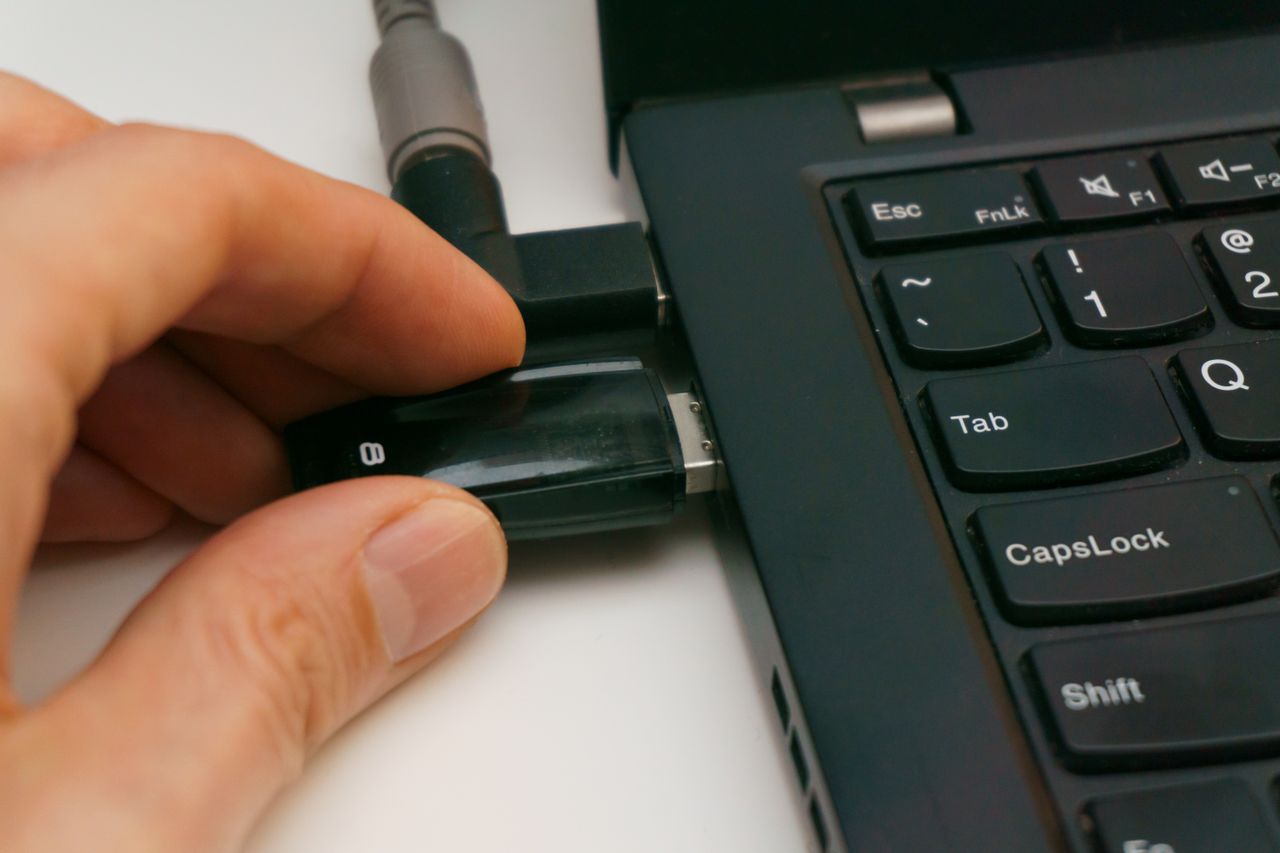
The copy progress bar disappears, so is it time to pull the cable? Not necessarily. Applications may still have files open, and the operating system may be managing writes that are not obvious in the foreground. The intended eject function provides a controlled way to disconnect external storage. It usually adds little effort and removes an avoidable source of file problems.
Finish active work
Save documents stored on the drive and close the applications using them. Wait for a clear completion state from backup or synchronization software. Processing many small files may take longer than a quick glance at the total size suggests.
Identify the correct drive. Clear volume names help when several similar devices are connected. Check the contents or properties if needed. Accidentally ejecting a different drive may interrupt another task and make the situation harder to understand.
Use the eject command
In Windows, use Safely Remove Hardware and Eject Media for the intended device and wait for confirmation that it can be removed. On other systems, use the corresponding eject command in the file manager. Disconnect the data cable only afterwards.
If the device is reported as busy, do not simply unplug it anyway. Check open files, preview windows, and running copy or backup jobs. Close the relevant applications and retry. If the problem persists, an orderly computer shutdown may provide the clearer way to finish.
Check carefully after an interruption
If a drive is disconnected accidentally during transfer, reconnect it and inspect the files involved most recently. Check both source and destination. An existing destination file may be incomplete; its size and an opening test provide initial clues. A content comparison can help verify unchanged copies.
Important files should be backed up independently of this single drive. Safe ejection does not prevent hardware failure, loss, or theft. It is one part of careful handling rather than a replacement for recoverability. Store cables and drives so connectors and housings are not unnecessarily strained during transport.