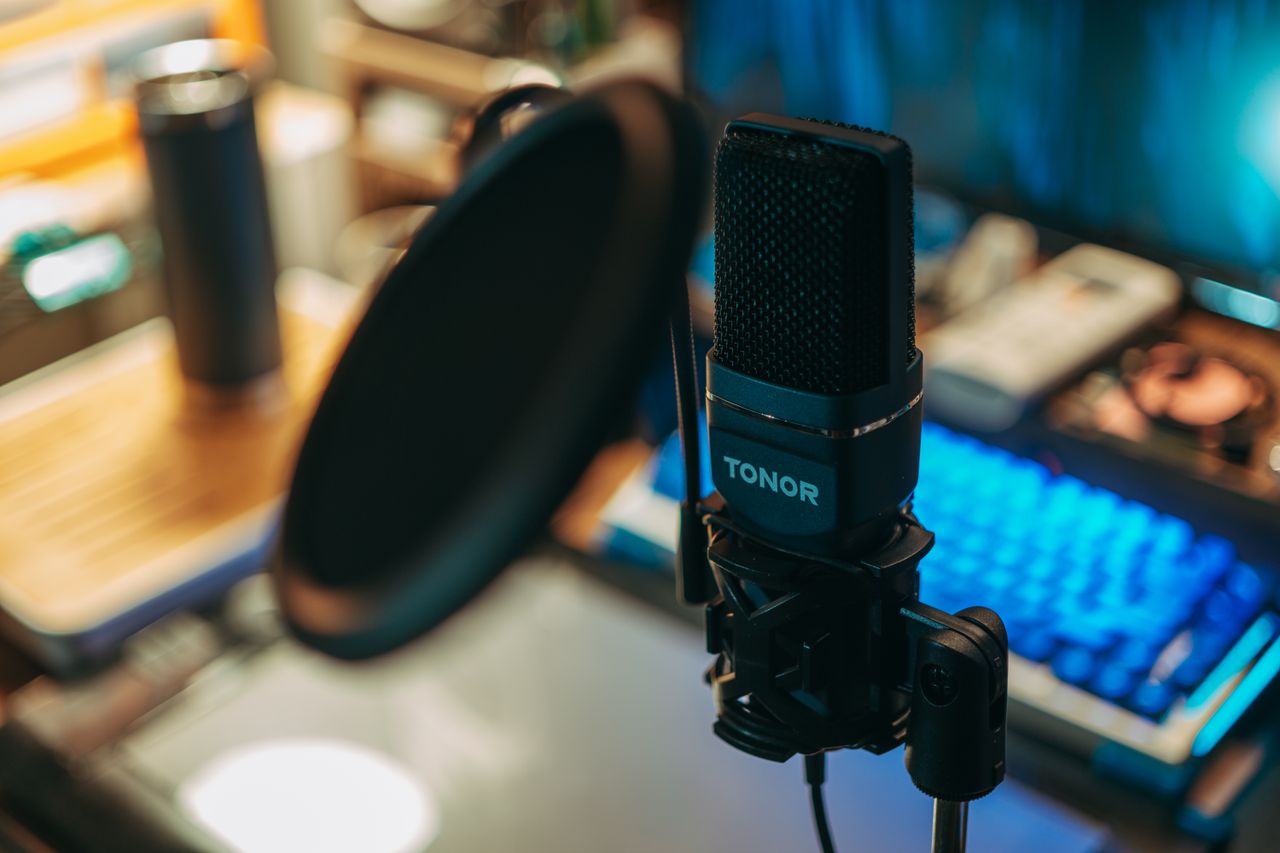
In a shared workroom, your voice needs to remain understandable while someone else types or takes a call. A more expensive microphone does not reliably separate those sounds by itself. Distance, orientation, and the room all matter. Make a brief recording at the actual workstation before deciding which kind of microphone to buy.
Bring your voice closer
A microphone near your mouth can make your voice more prominent relative to distant room noise. A headset keeps that distance relatively consistent as you move your head. A desk microphone can work too, but it needs a useful position rather than being placed far away because it looks tidier there.
For directional microphones, check the intended speaking direction. The housing does not always make this obvious. Read the instructions instead of assuming you should speak into the top. A pop filter or slightly offset position may help with breath noise, but neither replaces sensible orientation and input-level adjustment.
Investigate the actual noise
Record normal speech while typical sounds occur: typing, a fan, or another voice in the room. Listen through headphones. Determine whether the main issue is steady noise, individual impacts, or reverberant speech. Those problems call for different changes rather than a single universal accessory.
A microphone arm may reduce desk noise if it limits mechanical transmission effectively. A hard, empty room can still sound reverberant. Try straightforward changes such as a different location or existing soft furnishings. Test noise-suppression features with your room and voice, since processing can affect parts of the speech as well.
Include connection and controls
Check whether the microphone connects directly to the computer or needs additional equipment. For calls, an accessible mute control and clear indicator may matter more than numerous recording formats. Confirm that the meeting application actually selects the new microphone after it is connected.
Compare candidates using the same short passage, in the same place, at your normal speaking volume. The aim is understandable speech without constant adjustments. If two confidential conversations must happen simultaneously in one room, no microphone solves the whole situation. A change in timing or location may be more effective than another audio purchase. Treat the equipment as one part of the arrangement, not as a substitute for it.